


General
Patients suffer amid mismanagement allegations at Sherpur Sadar Hospital
Translated by Desk Report
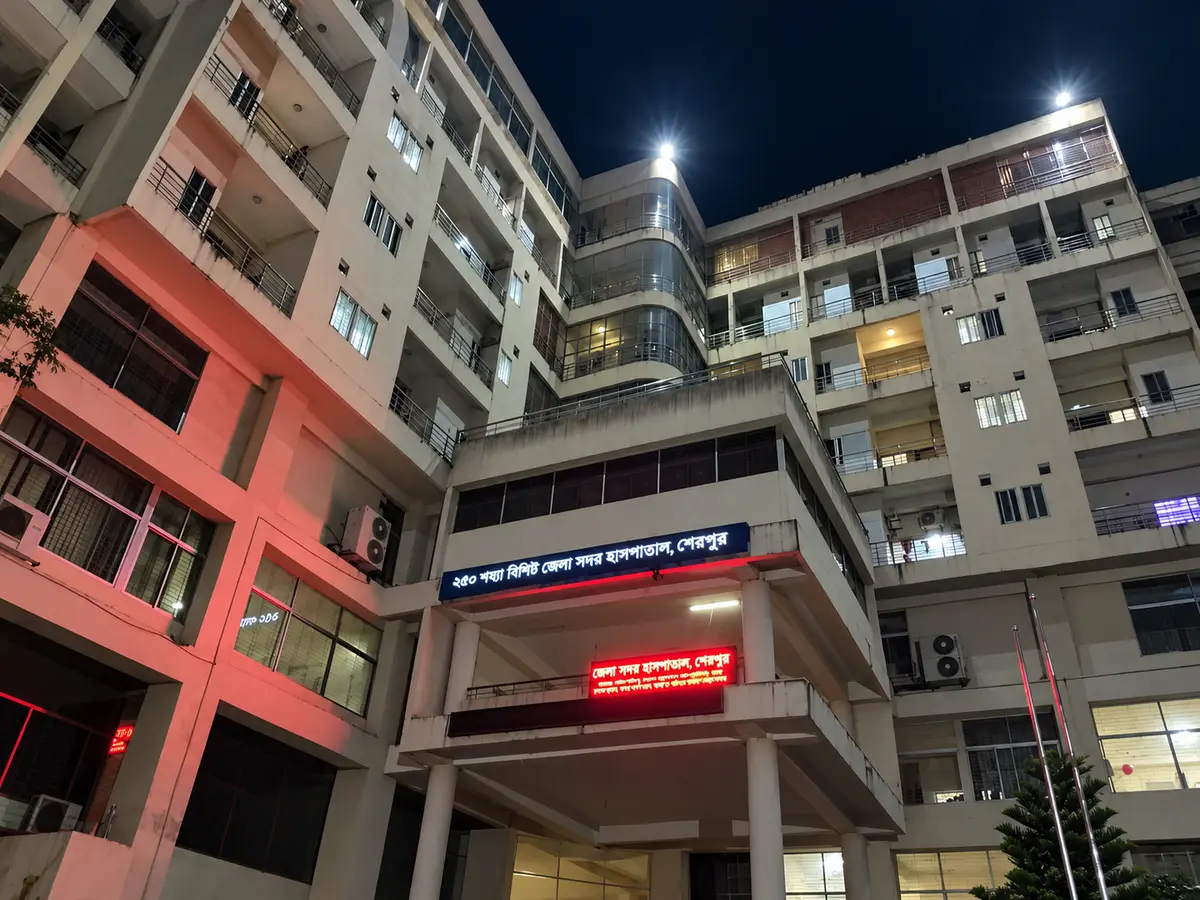
Patients and their relatives face a range of difficulties when seeking treatment at the 250-bed Sherpur District Sadar Hospital. They have expressed frustration over unhygienic conditions, a broken lift, shortages of doctors and beds, alleged misconduct by nurses and inadequate emergency services.
Many people from across the district come to the hospital every day for treatment. The government hospital is a major source of care, particularly for poor and low-income people. But alleged service gaps and mismanagement are undermining their confidence in it.
Broken lift adds to patients’ suffering
There are complaints that the hospital’s lift breaks down, causing disruption every few days. The lift is particularly important for elderly, critically ill and postoperative patients, as well as people unable to move independently.
When the lift is out of service, moving patients between floors becomes difficult and requires extra effort from their relatives. For critically ill patients, the difficulty is an even greater cause for concern.
Those affected have called for regular maintenance and effective arrangements to repair the lift promptly when it breaks down.
Unhygienic conditions raise health concerns
Maintaining cleanliness is essential in a sensitive setting such as a hospital. Yet complaints have emerged about waste and unhygienic conditions in different parts of the facility.
Many patients seeking treatment are physically weak, and an unclean environment can pose additional health risks. Wards, toilets, patient passageways and surrounding areas, in particular, need regular cleaning.
A review is needed to establish whether cleaning operations are being carried out properly, whether designated staff are performing their duties regularly and how effectively the administration is supervising this work.
Doctor shortage disrupts care
The hospital also faces allegations that it has fewer doctors than it needs. When doctor numbers are inadequate for the patient load, delays in treatment can follow. Patients face long waits, while doctors come under additional pressure.
Adequate staffing is particularly important in managing patient numbers in the outpatient and emergency departments. Delays in receiving medical advice and necessary treatment cause anxiety among patients and their relatives.
However, establishing the actual situation requires verification of the number of sanctioned doctor posts, doctors currently working, vacancies and daily patient attendance.
Bed shortage leaves patients on the floor
A shortage of beds relative to patient numbers has emerged as a significant aspect of the hospital’s longstanding service difficulties. Some patients reportedly have to stay on the floor because they cannot get beds.
Staying on the floor while ill is extremely uncomfortable. It can hinder patients’ rest, hygiene and access to necessary care. Their relatives also face various difficulties.
An urgent review is needed of the hospital’s actual bed capacity, daily admissions and arrangements for managing patients beyond that capacity. The authorities concerned also need to take effective steps to ensure sufficient beds, clean bedding and hygienic conditions.
Complaints over nurses’ behaviour
Alongside the quality of treatment, staff behaviour matters to patients. Some nurses working at Sherpur Sadar Hospital have been accused of treating patients and their relatives poorly.
Patients and their relatives contend with illness, anxiety and uncertainty. In these circumstances, compassionate behaviour and necessary information from staff are important to their peace of mind.
These allegations, however, require impartial verification through accounts from the patients and relatives concerned and responses from the hospital authorities. If the allegations are substantiated, appropriate action should follow to ensure responsible behaviour.
Allegations of touts and phone theft raise security concerns
Allegations of rampant touting and mobile phone theft on hospital premises have also become a cause for concern. Patients and relatives seeking treatment are usually preoccupied and under stress. Fraud or theft exploiting that situation adds to their suffering.
Touting on hospital premises can hinder patients’ access to appropriate care. Theft, meanwhile, raises questions about the security of patients and their relatives.
The allegations need to be verified, monitoring increased and security strengthened, with prompt action on complaints. If evidence establishes the involvement of touting rackets, legal action should follow.
Dissatisfaction over emergency services
Immediate treatment in the emergency department is vital for patients. People injured in accidents or suffering sudden illness or serious health problems come to the department seeking rapid care.
However, there are allegations that patients at Sherpur Sadar Hospital’s emergency department are not receiving necessary care on time. If true, the complaints are concerning, as delays in emergency treatment can cause a patient’s condition to deteriorate.
A review is needed of doctor and other essential staffing levels, patient assessment, initial treatment, necessary tests and the effectiveness of arrangements for rapid treatment of critically ill patients.
Mymensingh referrals raise questions about treatment capacity
Reports also indicate dissatisfaction among patients and relatives over referrals from Sherpur Sadar Hospital to Mymensingh Medical College Hospital.
When a hospital cannot provide the treatment a patient needs, referral elsewhere for advanced care is normal and often essential. But if patients are routinely sent elsewhere even though the necessary treatment, tests or specialist services could be provided locally, the matter requires investigation.
Patients complain that referrals increase their travel, treatment costs and time pressures. Moving a critically ill patient to another hospital also causes relatives additional anxiety.
Without evidence, however, it is not possible to establish whether any irregularities or commercial interests are involved in referrals to Mymensingh. Determining the actual situation requires scrutiny of referral figures, patients’ conditions, their treatment needs and the hospital’s capacity to provide care.
Questions over administrative oversight
Successive complaints about hospital services have also raised questions about the effectiveness of administrative oversight. Cleanliness, the performance of doctors and nurses, lift maintenance, bed shortages, security and emergency department operations require regular monitoring.
Without proper oversight in these areas, reducing patients’ suffering becomes difficult. The hospital administration and the relevant health department therefore need to examine the complaints seriously and take effective steps towards lasting solutions.
Effective action needed
Sherpur Sadar Hospital is one of the district’s most important healthcare institutions for ordinary people. Improving its services would benefit many residents and could reduce the need to travel elsewhere for advanced treatment.
Urgent priorities include keeping the lift operational, ensuring cleanliness, recruiting the necessary doctors and other staff, providing adequate beds, ensuring responsible behaviour by nurses and other employees, and taking effective measures to address allegations of touting and theft.
The hospital also needs to ensure prompt emergency treatment and transparency in referrals to other hospitals.
Access to quality care at publicly funded government hospitals is a right. Local residents expect impartial investigations into the allegations, administrative accountability and tangible improvements to raise the standard of care at Sherpur Sadar Hospital.