



General
Development vs environment: Mirsarai’s forests and vanishing spotted deer
Translated by Burhan Joy
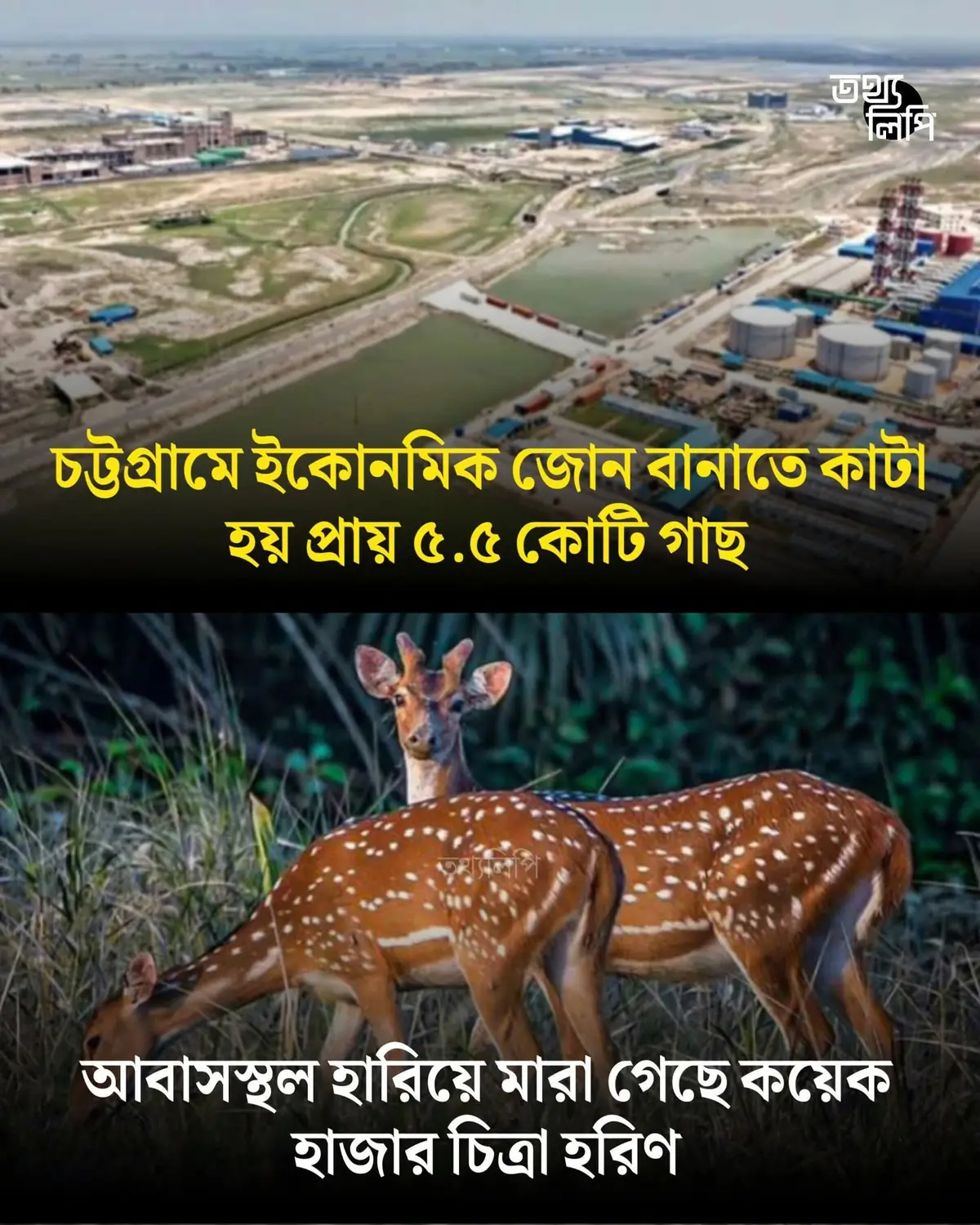
Development undoubtedly keeps our economy moving. But if defenceless wildlife and our green landscapes must pay the price, the damage can never be repaired. We certainly need economic prosperity, but not at the cost of destroying a forest ecosystem.
When work began on one of the country’s largest economic zones in Mirsarai, Chattogram, it had a severe impact on the local environment. Nearly 5.5 crore trees were felled across a vast area to make room for the industrial zone, destroying the coastal area’s ecological balance and wildlife habitats in one stroke.
Once, around 10,000 to 12,000 spotted deer lived freely in this extensive coastal forest. According to environmentalists and the Forest Department, however, indiscriminate forest destruction and disturbance from continuous construction have caused nearly 80 percent of the area’s spotted deer to disappear. These beautiful animals, which help maintain nature’s balance, are now displaced within their own habitat.
The few deer that remain after losing their habitat face extreme uncertainty and a lack of protection. In search of food or safe shelter, they frequently stray into settlements or onto main roads. Some are killed by speeding vehicles; others fall prey to ruthless hunters. In April 2026, a deer was captured and slaughtered in Mirsarai’s Muhuri Project area—a brutal incident that reminds us how vulnerable these defenceless animals are.
Alongside industrialisation, planned afforestation and a designated safe corridor or sanctuary for deer and other wildlife are now urgently needed. Unless effective steps towards sustainable development and biodiversity conservation are taken now, these captivating spotted deer will soon disappear from Mirsarai forever.