


General
Char Madhupur on the Brink of Disappearing as Madhumati River Erosion Threatens Residents’ Last Shelter
Translated by Desk Report
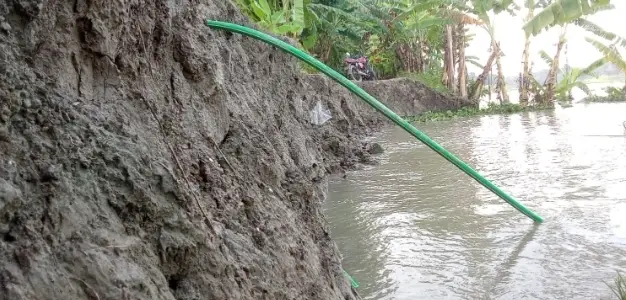
The river was once the source of their livelihood, but that same river is now taking away their last means of survival. Continuous erosion by the Madhumati River has raised fears that residential settlements in Char Madhupur village, located in Pahardanga Union under Naragati Police Station in Kalia Upazila of Narail district, may disappear. The village, once filled with houses, trees and agricultural fields, now faces growing uncertainty along the riverbank. Many families have been left destitute after losing their homesteads and cultivable land to erosion. Those who are still holding on to their properties fear that the river could take away their last remaining shelter at any moment.
According to local residents, riverbank erosion is not new to Char Madhupur. For a long time, the Madhumati River has been gradually swallowing the land of the settlement. Although the damage caused by erosion has increased over time, the absence of permanent protective measures has left residents deeply concerned. Many have already left the area after losing their homesteads. Some have moved their houses to safer locations, while others continue to hold on to the last remaining portions of their ancestral land. They fear that unless immediate action is taken, protecting the remaining houses will become increasingly difficult.
During a visit to the area, several houses along the riverbank were found to be at risk. In some places, the river's current has reached close to residential properties. For families living along the riverbank, days and nights bring different experiences. During the day, they witness erosion before their eyes, while at night, the fear of the unknown intensifies. The constant worry over when the riverbank might collapse and their houses might disappear into the river has disrupted the normal lives of many residents.
Mizan Mallik is living in fear of losing his ancestral homestead. He said, “After losing everything, only my ancestral homestead remains. I cannot sleep day or night because of the fear that it may disappear into the river at any moment. There are no houses left around mine. Now I am worried about when my house will also be lost.”
Another local resident, Alhaj Mallik, described his long experience of riverbank erosion, saying, “I have been witnessing this erosion since birth. Year after year, riverbank erosion has left my family and me helpless.”
The concerns of Char Madhupur residents are no longer limited to the shrinking boundaries of their land. They now face questions about where they will go with their families if they lose their homesteads and how they will sustain their livelihoods. When agricultural land is lost alongside houses due to riverbank erosion, economic hardship also increases. Leaving behind long-standing neighbours, familiar surroundings and ancestral homes filled with memories is equally painful for them. According to local residents, alongside considering relief or assistance after losses occur, it is essential to identify vulnerable riverbanks in advance and take preventive measures.
Mallik Mahmudul Islam, chairman of Pahardanga Union Parishad No. 10, said, “Riverbank erosion has intensified significantly in Char Madhupur. We are requesting immediate action. The matter has already been reported in writing to the Kalia Upazila administration.” His statement highlighted the need for prompt action from the perspective of a local elected representative.
Kalia Upazila Nirbahi Officer (UNO) Jinnatul Islam said, “I have already been informed about the riverbank erosion in Char Madhupur. The appropriate authorities will be informed promptly, and the matter has also been communicated for necessary action.” Although the administration has stated that the issue will be brought to the attention of the relevant authorities, residents living along the riverbank are now waiting for swift and effective measures.
Meanwhile, Narail-1 Member of Parliament Alhaj Biswas Jahangir Alam has said that he stands beside the people affected by riverbank erosion. He said, “I have learned about the suffering and hardship of the people affected by riverbank erosion in Char Madhupur village. The appropriate authorities have been instructed to take prompt action. I have stood beside the people of riverbank erosion-affected areas in the past, I stand beside them now, and I will continue to do so, Insha'Allah.”
Residents of Char Madhupur have demanded that the vulnerable sections of the riverbank be inspected urgently and necessary protective measures be taken. They have proposed that appropriate engineering measures, including the use of geobags, should be implemented based on the situation. They have also called for the implementation of a long-term riverbank protection project rather than relying solely on temporary protection. At the same time, they have urged the authorities to consider rehabilitation and emergency assistance for families who have already been affected by erosion.
Losing a house to riverbank erosion does not simply mean losing a structure made of bricks, wood or corrugated metal sheets; it also means losing a family's security, the foundation of its livelihood and memories accumulated over many years. For the residents of Char Madhupur, the biggest question now is how quickly effective measures will be taken to protect their remaining settlement. Coordinated, timely and sustainable initiatives by the relevant water development authorities and the administration could help protect the village from erosion by the Madhumati River. The people living along the riverbank hope that effective action will be taken before they lose their last remaining shelter.