World
Bangladeshis lured to Russia for jobs end up at war as families wait
Translated by Desk Report
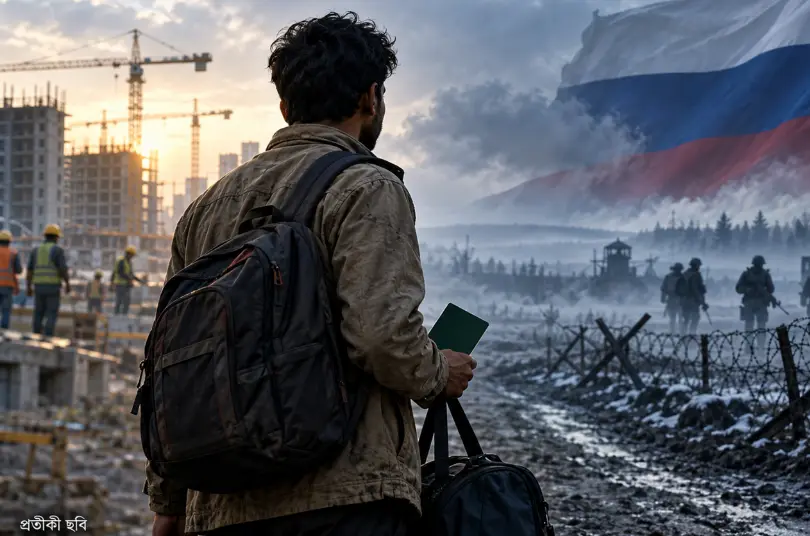
Some Bangladeshi workers who travelled to Russia on promises of well-paid jobs were allegedly sent to the battlefield instead. Some have returned home injured, while others remain in hospital. Many families have received news of deaths but remain in uncertainty without official confirmation or the bodies of their loved ones.
The Special Response Battalion (SRB) said it had received information that at least 20 of the 30 Bangladeshis who travelled to Russia on May 7 had died. At a press conference on October 14, the force said the workers had been taken abroad on promises of jobs at construction companies, but were later given military training and sent to war.
The total number of Bangladeshis killed or missing remains unclear. Accounts from families and returning workers also differ from information provided by the Russian authorities.
Allegations of being sent to army camps instead of jobs
According to the SRB, the 30 workers travelled to Russia through Jabale Noor, RS International and TS Group. Each paid about Tk 10 lakh on average. On arrival, they were allegedly handed over to the Russian army instead of being placed in the jobs they had been promised.
Jabale Noor International founder Mizanur Rahman and Abu Taher, alias Lentu, were arrested on October 13 on allegations of involvement in human trafficking in connection with the case.
Rajon Hossain, who returned home to Jhenaidah, said he was kept in a hotel for several days after arriving in Russia and made to sign a document. He was then sent to an army camp. After about three weeks of training, he and five other Bangladeshis were sent to the front line.
Rajon said four members of their group died in a drone attack. He was injured and admitted to hospital, from where he later escaped and returned home.
Adnan Hossain of Narayanganj also said he was injured on the battlefield. He said he underwent three operations after being admitted to a Moscow hospital with shrapnel wounds to his abdomen. After about two months of treatment, he left the hospital and went to the Bangladesh embassy. He later obtained a travel permit and returned home on September 15.
News of deaths, but no confirmation
The family of Abdullah Al Mamun from Lalmonirhat, who travelled to Russia, has also received news of his death. His father, Abdul Majid, said Mamun called his younger brother before being sent to war and expressed fears that they might never see each other again. The family lost contact with him after that.
They later heard of his death through a fellow traveller but have been unable to obtain official confirmation. As they wait for his body, his relatives are also struggling with debt and uncertainty over the household’s future.
Meanwhile, the family of another worker, Md Palash Sheikh, said he was receiving treatment at a Moscow hospital after being injured in the war. His relatives allege that he was deceived after travelling to Russia for work. They have sought help to bring him home.
Questions over workers sent without approval
In a letter sent to the Ministry of Expatriates’ Welfare and Overseas Employment on May 25, the labour wing of the Bangladesh embassy in Russia raised questions about the recruitment process.
According to the letter, workers were sent under the names of other agencies after Jabale Noor and RS International failed to obtain embassy attestation for their recruitment process. The embassy requested an investigation. It also said it had contacted Russia’s foreign ministry to seek the workers’ return to the jobs specified in their appointment letters rather than sending them to war.
Last July, families submitted separate applications to the Ministry of Expatriates’ Welfare and Overseas Employment seeking the safe return of their relatives. The applications alleged that the workers had been lured abroad with promises of jobs and then sent to war.
Russia says they volunteered; families dispute the account
Bangladesh’s ambassador to Russia, Md Nazrul Islam, said the Russian authorities had told him that the Bangladeshis concerned joined the war voluntarily and that they held written documents to that effect.
Returning workers and relatives, however, allege that they were taken abroad on promises of jobs and forced to go to war. The returning workers said they were made to sign papers before being sent to army camps.
The ambassador also said the bodies could not be sent home because the Russian authorities had not handed them over.
According to foreign ministry sources, Russia has so far provided information on 40 Bangladeshis who are either dead or missing. It has not specified how many were killed and how many remain missing. All those missing therefore cannot be confirmed dead.
Lack of death records also blocks access to assistance
The Wage Earners’ Welfare Board has arrangements to repatriate the bodies of workers who die abroad and provide financial assistance to their families. Without official proof of death, however, the families concerned are struggling even to apply.
Claiming compensation in Russia also requires several procedures, including establishing legal heirs. The absence of bodies and necessary documents is prolonging the families’ uncertainty.
Three agencies lose licences
The expatriates’ welfare ministry has revoked the licences of Jabale Noor, TS Overseas and RS International, which were involved in sending the 30 workers. It has also barred Banya Bijoy Overseas from obtaining new emigration clearances.
According to BMET data, 37 people received clearance to travel to Russia in 2023. The number rose to 1,395 in 2024 and 4,725 in 2025. Up to October 15 this year, 3,105 people received clearance. These figures, however, cover people travelling legally for employment; they do not indicate that all became involved in the war.
Expatriates’ Welfare and Overseas Employment Minister Ariful Haque Chowdhury said clearances were not being issued without verification and attestation of job information. Embassies have been alerted to step up monitoring of people travelling abroad through alternative routes. Diplomatic contacts are also underway to identify and repatriate the bodies of those killed.
Shariful Hasan, head of BRAC’s migration programme, recommended setting up a hotline to compile a list of missing people. He stressed the need for coordinated collection of information on how many workers who travelled to Russia had found jobs, how many remained trapped on the battlefield and how many had died.