

Technology
Rooppur Nuclear Power Plant Cleared for First Nuclear Reaction, Power Supply Still Months Away
Translated by Desk Report
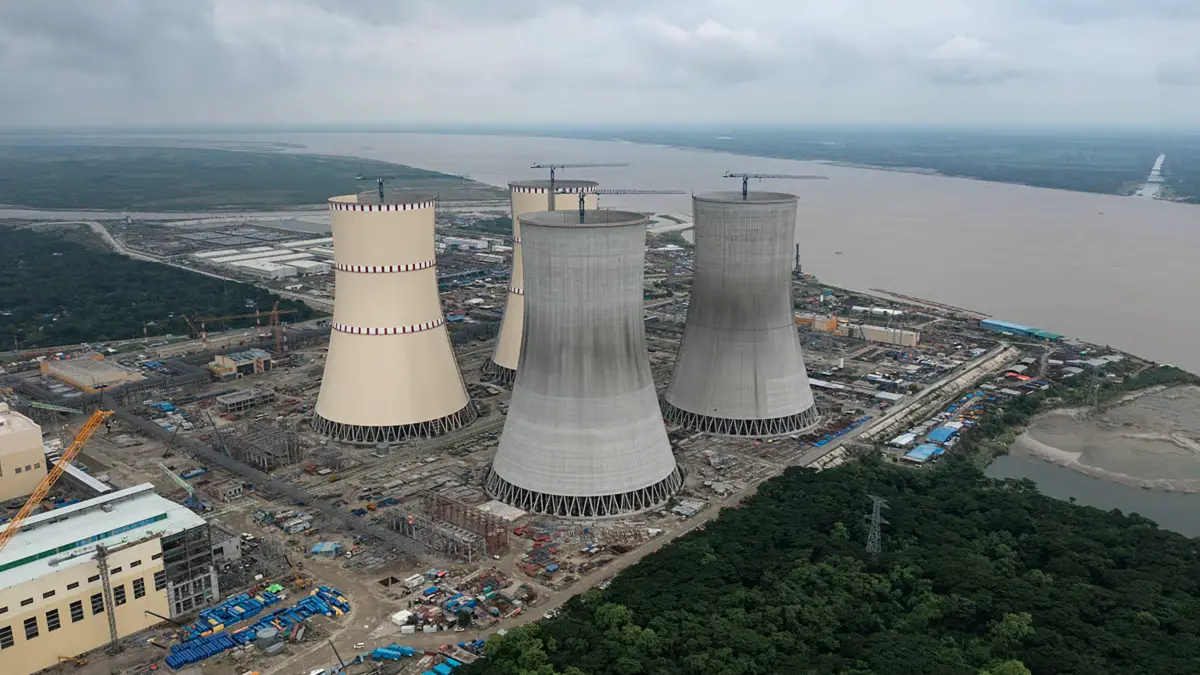
Bangladesh's first nuclear power plant, Rooppur, has received regulatory approval to initiate a controlled nuclear chain reaction in its first unit, marking a significant milestone towards electricity generation. However, several technical tests and additional regulatory clearances must be completed before the plant can begin supplying electricity to the national grid.
The Bangladesh Atomic Energy Regulatory Authority (BAERA) granted Stage B-2 approval for the plant's first unit on Thursday (October 8), paving the way for the initiation of its first controlled nuclear chain reaction, technically known as "first criticality."
BAERA Chairman Mahmudul Hasan said the unit must obtain two further regulatory clearances, designated Stage C and Stage D, before electricity can be supplied to the national grid.
Each subsequent phase will require satisfactory results from technical assessments and compliance with established nuclear safety standards.
Technical Challenges Resolved
The approval follows efforts to address technical problems involving automatic pressure-control systems and safety valves in the plant's first unit.
These components are essential to maintaining safe operating conditions within a nuclear reactor. The technical issues had contributed to delays in securing permission to initiate the nuclear reaction.
A team of Russian specialists worked at the project site to resolve the problems. Following the necessary technical adjustments and a series of inspections and tests, the safety systems were assessed, allowing the regulatory authority to grant approval for the next stage of operations.
How Electricity Generation Will Begin
During the first criticality phase, the reactor will initiate a controlled, self-sustaining nuclear chain reaction. Initially, it will operate at less than 1 percent of its full thermal capacity.
Engineers will closely monitor reactor temperature, pressure, control systems and other critical safety parameters to ensure stable and secure operations.
If the initial tests produce satisfactory results, the reactor's thermal power will be increased gradually under controlled conditions.
At a later stage, heat generated through nuclear fission will be used to produce steam, which will drive turbines connected to electricity generators.
According to project officials, reaching the electricity generation stage could take approximately six to ten weeks, depending on the progress and outcomes of the required technical assessments. However, the timeframe remains tentative.
Trial Power Supply Expected by Late December
Project officials expect the first unit to begin supplying electricity to Bangladesh's national grid on a trial basis by the end of December, provided that all technical tests and regulatory approvals are completed as scheduled.
The initial electricity supply could reach approximately 300 megawatts, with output increasing gradually as the plant progresses through additional testing and operational assessments.
However, the commencement of trial electricity supply should not be confused with the beginning of full-scale commercial operations.
The plant will need to undergo further safety evaluations, performance testing and regulatory inspections before it can operate at its full designed capacity.
A Major Development for Bangladesh's Energy Sector
Located in Ishwardi, Pabna, the Rooppur Nuclear Power Plant is Bangladesh's first nuclear power generation facility.
Developed with Russian financial and technical assistance, the plant comprises two reactor units, each designed to generate 1,200 megawatts of electricity.
Once both units become fully operational, the facility will have a combined installed generation capacity of 2,400 megawatts.
The project is being implemented under the supervision of the Bangladesh Atomic Energy Commission, with Atomstroyexport, a subsidiary of Russia's state nuclear corporation Rosatom, serving as a principal construction contractor.
Nuclear fuel loading at the first unit began on April 28, 2026. Since then, the project has progressed through several stages of technical testing, inspections and safety verification.
The latest regulatory clearance represents another important step towards bringing Bangladesh's first nuclear power plant into operation.
Once electricity generation begins, Rooppur is expected to diversify the country's energy mix by introducing nuclear power as a new source of electricity.
Nevertheless, the project's transition to commercial operations will depend on the successful completion of the remaining technical procedures, comprehensive safety assessments and final regulatory approvals.