



Technology
Apple acquires Sonera, opening new tech horizons for Bangladeshi researcher Saif Salahuddin
Translated by Burhan Joy
Touqibul Hasan Siam, JU correspondent Date: 21 October 2026
Apple has acquired Sonera, a startup that develops non-invasive sensor technology capable of detecting brain activity and signals without inserting instruments into the body. The acquisition process began earlier this year, and European Union records indicate it was completed in mid-2026. Neither Apple nor Sonera, however, has formally announced the deal.
One of Sonera’s three co-founders is Dr Saif Salahuddin, a US-based researcher of Bangladeshi origin. After graduating from Bangladesh University of Engineering and Technology (BUET) in 2003, he earned a PhD from Purdue University in the United States. His research on magnetic sensors is linked to Sonera’s technology. In 2016, then US president Barack Obama honoured him with the Presidential Early Career Award for Scientists and Engineers, one of the US government’s highest honours, in recognition of his research in science and engineering.
Nishita Deka and Dominic Labanowski founded the startup in 2018 while studying at the University of California, Berkeley.
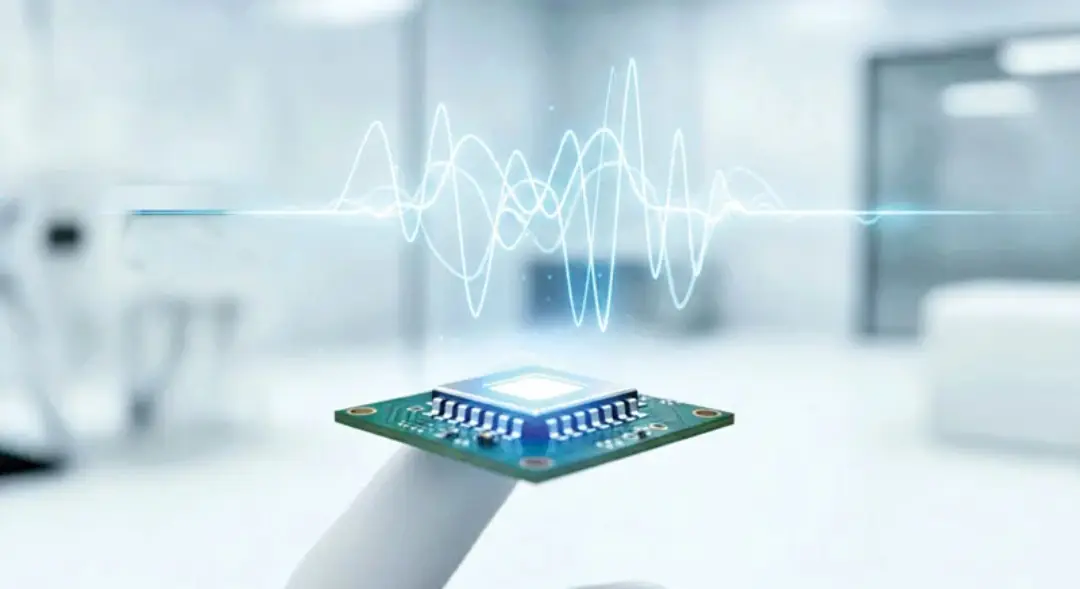
Salahuddin, a professor at the university, supervised Labanowski’s PhD research, and the three built the research company together. Initially called Sonera Magnetics, the startup received $1 crore 10 lakh in grants in its first phase in 2023. Its first invention was S1, a specialised chip designed to detect muscle movement. Its developers claim the technology can accurately detect magnetic activity in the human brain.
Electrical signals typically weaken considerably as they pass through the skull. This technology instead detects magnetic signals. Co-founder Nishita Deka had said their initial aim was to make brain-imaging technology portable and affordable, and to directly detect several types of signals associated with brain activity. The technology would be particularly useful in wearable devices for controlling artificial limbs and for humanitarian applications.
According to an AppleInsider report, the chip could be used in future Apple Watches and other devices worn on the body. Sonera’s technology can detect the underlying signals of the brain, nerves and muscles. In future, this could allow users to issue commands to devices such as Apple Vision Pro simply by moving their jaw muscles, without speaking. People with physical disabilities, particularly those without hands, could also move artificial hands using thought alone. Such sensors would also be highly useful for regularly monitoring nerve and muscle disorders.
Although Apple did not want to disclose the acquisition early, it did not want to miss out on this small, $2 crore healthcare startup. For the company, ideas about the future matter more than money. While there is often talk of “brain drain”, researchers such as Dr Saif Salahuddin demonstrate that brains are never truly drained; rather, their benefits spread across the world. From BUET classrooms to Berkeley laboratories and then to Apple’s boardroom, this 12,000-mile journey shows that distance is no barrier to belief, dedication and potential.